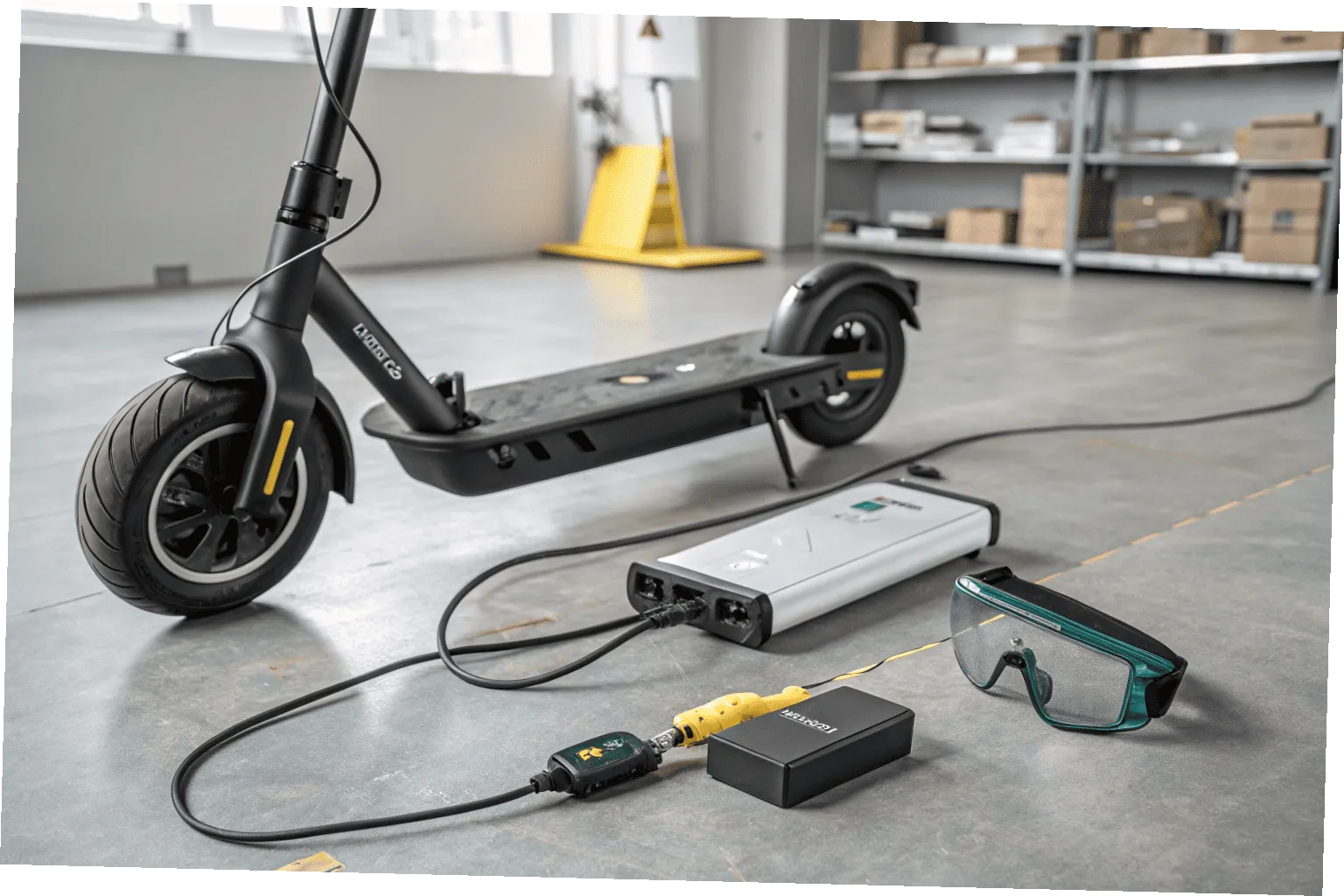
Electric scooters charge without original chargers using controlled alternative power sources. Charging works when voltage (24V–48V), current (1A–3A), and connector polarity match battery specifications.
Lithium-ion batteries power 90% of electric scooters and operate within defined electrical limits. A 36V battery charges at 42V, while a 48V battery charges at 54.6V. Voltage deviation above +5V damages lithium cells and reduces capacity by 20%–50%.
Battery Management Systems (BMS) regulate current flow, voltage stability, and thermal limits. The BMS disconnects charging when input exceeds safe thresholds by 5%–10% or temperature rises above 45°C. This protection prevents thermal runaway and internal short circuits.
Alternative charging methods rely on controlled current–constant voltage (CC-CV) delivery. Stable input preserves electrolyte balance, while unstable input increases internal resistance and accelerates degradation.
Unsafe charging introduces three primary risks: overheating above 45°C, cell swelling due to gas formation, and thermal runaway leading to fire. These risks increase when voltage mismatch, reverse polarity, or unregulated current occurs.
Alternative charging functions as a temporary solution. Accurate voltage matching, correct polarity alignment, and controlled current input maintain battery stability during emergency charging scenarios.
Can You Charge an Electric Scooter Without Its Original Charger?
Yes, electric scooters charge without original chargers if voltage, current, connector type, and polarity match battery specifications. Lithium-ion batteries with BMS accept controlled input within defined electrical limits.
Voltage alignment defines charging success. A 36V battery charges at 42V, while a 48V battery charges at 54.6V. Input deviation above +5V damages lithium cells and reduces capacity by 20%–50%.
Current stability controls heat generation. Most scooter batteries operate safely within 1A–3A input range. Higher current increases internal resistance and accelerates electrolyte degradation.
The Battery Management System (BMS) regulates overcharge protection, current flow, and thermal cutoff. The BMS disconnects charging when temperature exceeds 45°C or voltage exceeds safe limits by 5%–10%.
Incorrect input damages battery cells within 5–30 minutes. Damage includes overheating, cell swelling, and permanent capacity loss. Controlled electrical matching maintains battery stability during alternative charging.
What You Must Check Before Charging Without a Charger
Charging without a charger works after three checks: voltage and capacity, connector type and polarity, and battery chemistry. Each parameter defines compatibility, safety, and charging efficiency.
Identify Battery Voltage and Capacity
Identify battery voltage and capacity first because voltage defines compatibility and capacity defines charging duration. Electric scooters operate on 24V, 36V, or 48V systems, with capacity between 5Ah and 20Ah.
Voltage mismatch above +5V damages internal lithium cells and reduces lifespan by up to 50%. A 24V battery charges at 29.4V, a 36V battery at 42V, and a 48V battery at 54.6V.
Capacity influences heat and charging time. A 5Ah battery charges faster with lower thermal load, while a 20Ah battery requires longer duration and generates more heat under unstable current.
Identify Connector Type and Polarity
Identify connector type and polarity next because physical connection and electrical direction must align. Common connectors include DC barrel, XT60, and GX16.
Positive (+) and negative (–) polarity must match exactly. Reverse polarity causes instant circuit failure and damages charging ports and internal circuits.
Connector compatibility requires three conditions: correct fit, correct polarity, and correct current rating. Failure in any condition results in unstable charging or hardware damage.
5 Ways to Charge an Electric Scooter Without a Charger
Electric scooters charge without original chargers through five alternative methods: universal power adapters, bench power supplies, compatible scooter chargers, car batteries with inverters, and laptop chargers in limited cases. Each method depends on exact voltage matching, controlled current, and connector compatibility.
Use a Universal Power Adapter
Use a universal power adapter when adjustable voltage and current settings match the scooter battery. Universal adapters supply 12V–60V output, which covers most 24V, 36V, and 48V scooter systems.
Match output voltage exactly with the battery charging voltage. A 36V scooter requires 42V output, while a 48V scooter requires 54.6V output. Set current below the battery maximum rating to reduce heat and cell stress.
Voltage accuracy determines battery safety. Output above the required charging voltage damages lithium-ion cells, stresses the BMS, and shortens cycle life.
Use a Bench Power Supply
Use a bench power supply when precise voltage and current control is required. Bench supplies allow exact adjustment, which makes them suitable for controlled diagnostic charging.
Set voltage to the battery full-charge value and limit current to 1A–3A. This range reduces thermal stress and supports stable CC-CV charging behavior in lithium-ion packs.
Technicians and repair engineers use bench supplies because they expose voltage, current, and stability in real time. That precision reduces charging risk during testing and fault isolation.
Use a Compatible Scooter Charger
Use a compatible scooter charger when voltage, connector type, and polarity match the original charger. This method remains the safest alternative because it follows the battery’s expected charging profile.
Output difference above 2V reduces battery lifespan by 20%–40%. Connector mismatch also prevents stable charging and may require adapter cables, but electrical compatibility remains more important than physical fit alone.
A compatible charger maintains charging efficiency because voltage, current, and connector standards align with the scooter battery system.
Use a Car Battery with Inverter
Use a car battery with an inverter when mains power is unavailable and the original charging method must be recreated indirectly. A car battery provides 12V DC output, and a power inverter converts 12V DC to 220V AC.
Use the scooter’s standard charger through the inverter output. This method requires a 150W–300W inverter and proper grounding to maintain stable power transfer and reduce electrical fault risk.
The inverter does not charge the scooter battery directly. It powers the standard charger, which then delivers the correct charging profile.
Use a Laptop Charger (Limited Cases)
Use a laptop charger only in limited low-voltage cases. Most laptop chargers output 19V–20V, which falls below the charging voltage required by most 24V, 36V, and 48V scooter batteries.
This method works only with rare low-voltage systems and only when voltage regulation is added. Direct connection without regulation creates unstable input and increases the risk of battery damage.
Laptop chargers remain a narrow technical workaround, not a general charging solution.
What Not to Do When Charging Without a Charger
Avoid direct wire connection because it bypasses voltage regulation and creates uncontrolled current flow. This condition produces instant short circuits and damages internal battery circuits within seconds.
Avoid high-voltage chargers above +10% range because excess voltage overloads the Battery Management System (BMS). This overload increases internal pressure, accelerates lithium degradation, and reduces battery lifespan by 20%–50%.
Avoid unregulated current input because unstable current increases thermal buildup. Battery temperature rising above 45°C indicates electrolyte breakdown and internal resistance growth.
Avoid charging physically damaged batteries because structural defects increase explosion risk. Swollen cells, leakage, or burnt ports indicate internal failure and unsafe charging conditions.
Safety Guidelines for Charging Electric Scooters
Charge electric scooters in controlled environments between 15°C and 30°C because stable ambient temperature maintains chemical balance inside lithium-ion cells.
Monitor battery temperature continuously because temperature reflects charging stability. A rise above 45°C indicates unsafe conditions and triggers BMS protection.
Stop charging immediately at 45°C threshold because overheating increases the risk of thermal runaway and internal cell rupture.
Avoid overnight alternative charging methods because extended exposure to uncontrolled input increases overheating probability and accelerates battery degradation.
When to Replace Your Scooter Charger
Replace the scooter charger when alternative charging fails after 2–3 attempts because repeated failure indicates voltage mismatch or charger instability.
Replace the charger when battery drains faster than normal because capacity loss above 30% signals improper charging cycles and internal cell imbalance.
Replace the charger when the charging port shows burn marks or loose connection because damaged terminals increase resistance and disrupt stable current flow.
FAQs
Can I use any charger for my electric scooter?
No, only compatible chargers work if voltage, current, and connector type match battery specifications. Mismatch prevents stable charging and increases damage risk.
What happens if I use the wrong charger?
Wrong chargers damage lithium-ion cells because incorrect voltage or current causes overheating, BMS stress, and reduces battery lifespan by up to 50%.
Can I charge an electric scooter with USB?
No, USB cannot charge electric scooters because USB output (5V–12V) remains far below required battery voltage (24V–48V).
How do I know my scooter voltage?
Check the battery voltage rating on the battery label or user manual. Most electric scooters operate at 24V, 36V, or 48V.
Conclusion
Electric scooters charge without original chargers through controlled alternative methods that match voltage, current, and polarity.
Voltage accuracy and current regulation maintain battery stability because lithium-ion cells operate within strict electrical limits.
Long-term use of alternative charging reduces battery lifespan because repeated mismatch increases internal resistance and accelerates degradation.