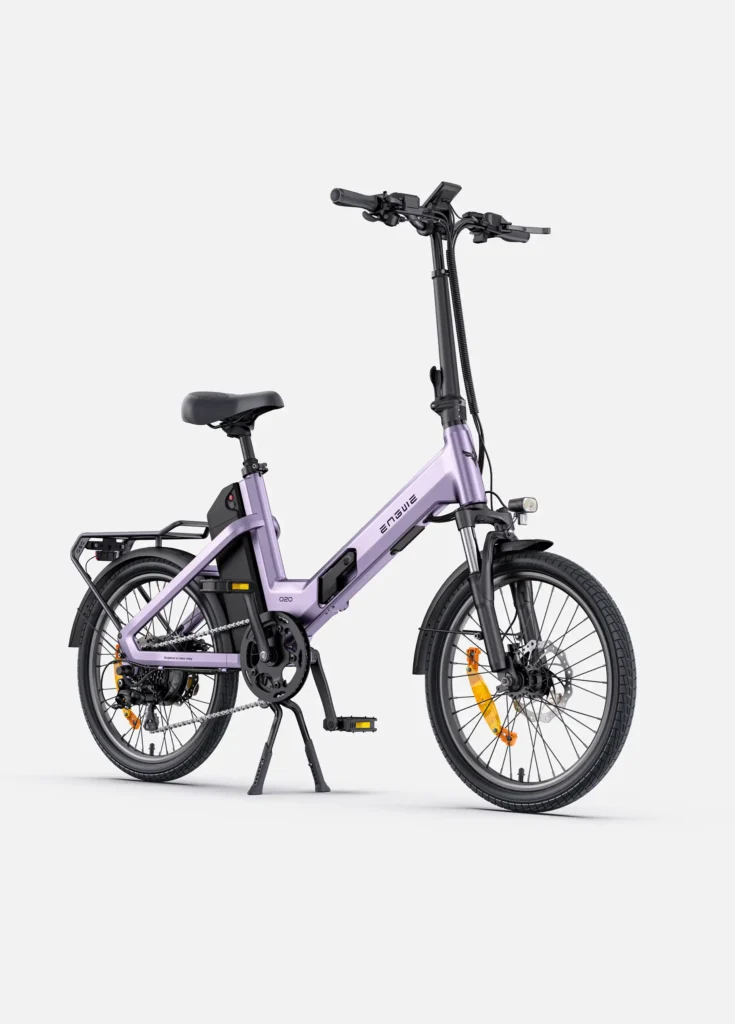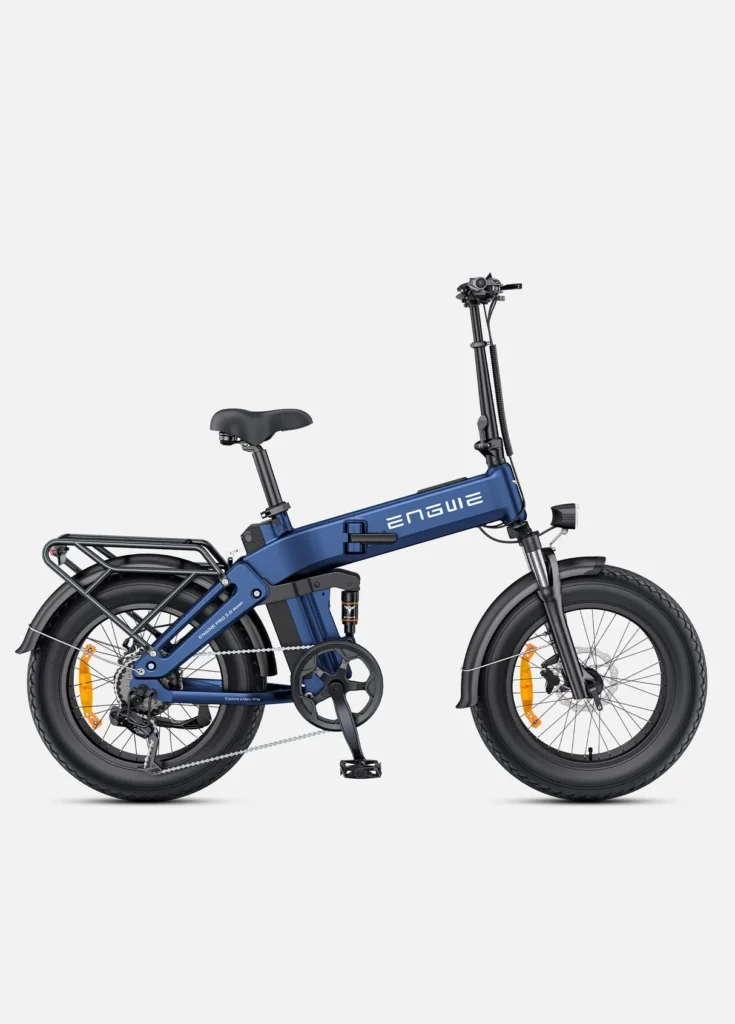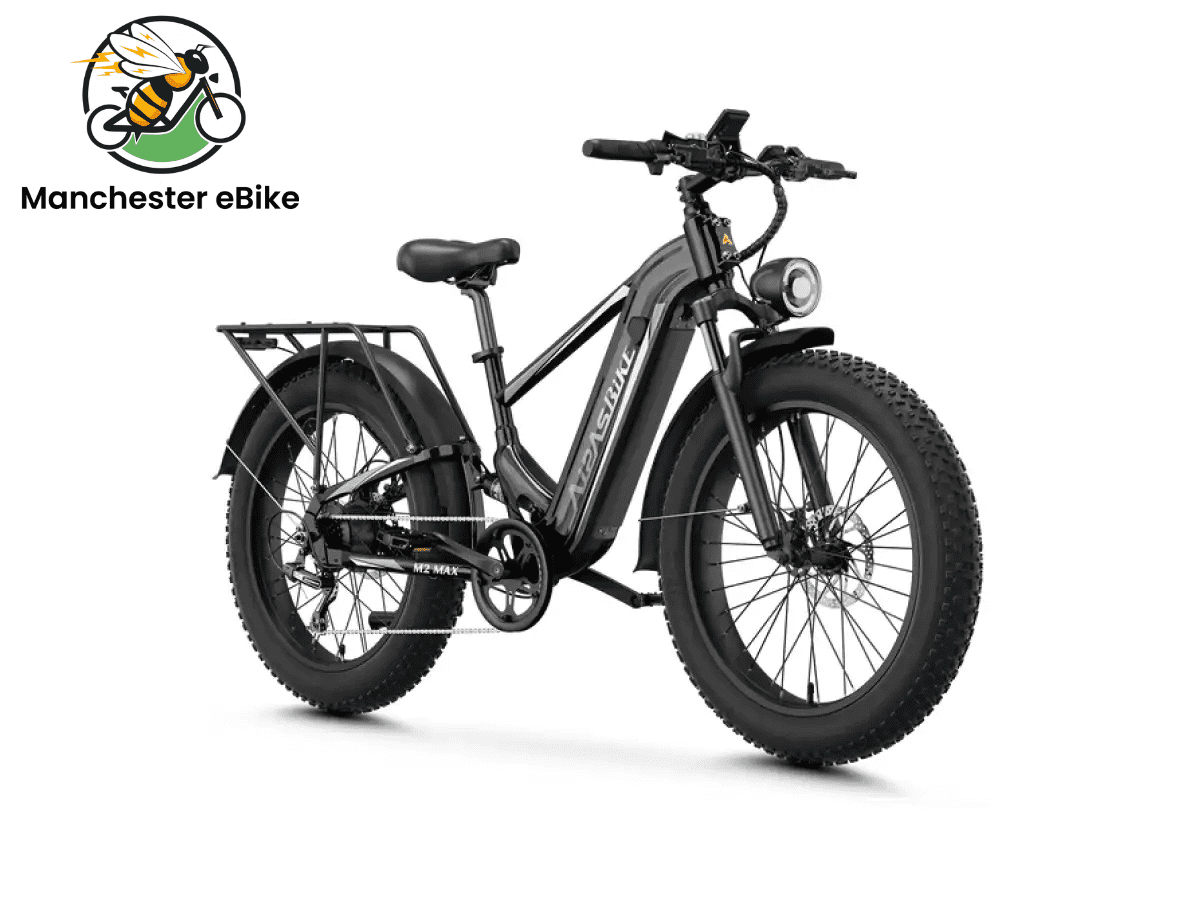
Winter riding demands more from an electric bike. Cold temperatures, wet roads, and stronger headwinds can significantly reduce battery efficiency, making range one of the most important factors for commuters and long-distance riders in 2026. A model that performs well in summer may not deliver the same mileage once temperatures drop.
For riders covering daily commutes or extended journeys across the UK particularly in cities like Manchester where winter conditions are frequent — a long-range electric bike with a high-capacity battery and efficient motor system becomes essential. Modern 750Wh to 1000Wh battery setups, improved battery management systems, and refined mid-drive motors now offer better cold-weather reliability, helping maintain consistent performance even in lower temperatures.
However, choosing the best option requires more than looking at advertised mileage. Real-world winter range, torque for slippery roads, waterproof build quality, and overall durability all play a critical role in ensuring dependable performance.
In this guide, we examine the best long-range electric bikes for Winter 2026, focusing on models that combine extended battery life, winter-ready design, and practical value for serious commuters and distance riders.
What Has Changed in Long-Range eBikes in 2026?
Long-range electric bikes in 2026 are significantly more refined than models available just a few years ago. For riders prioritising extended mileage in winter conditions, recent improvements in battery technology, motor efficiency, and intelligent power management have made a noticeable difference in real-world performance.
Battery Density Improvements
One of the most important advancements has been increased battery energy density. Modern lithium-ion battery packs now store more watt-hours (Wh) without dramatically increasing overall weight. Where 625Wh and 750Wh systems were once considered high-capacity, 2026 models commonly feature 800Wh to 1000Wh configurations designed for long-distance commuting.
Higher energy density means riders can achieve longer range per charge while maintaining balanced frame geometry and ride comfort. For those covering 40 to 70 miles daily, this translates into greater confidence during colder months when battery efficiency typically declines.
Motor Efficiency Upgrades
Motor systems have also evolved. Today’s mid-drive motors are engineered for smoother power delivery and improved energy optimisation, particularly under sustained pedal assist. Enhanced torque sensors now respond more precisely to rider input, reducing unnecessary battery drain during acceleration or hill climbs.
For winter commuters navigating wet or uneven roads, these efficiency upgrades help maintain consistent performance while preserving battery life. The result is a long-range electric bike that feels controlled and predictable rather than power-hungry.
Smart Battery Management Systems
Another major development is the integration of advanced Battery Management Systems (BMS). Modern systems actively monitor temperature, voltage stability, and charge cycles in real time. This is especially important in cold weather, where lithium-ion performance can fluctuate.
Smart power distribution not only protects battery health but also optimises usable capacity, ensuring riders get closer to the advertised range even in winter conditions. For buyers evaluating high-capacity eBikes in 2026, intelligent battery management has become a key differentiator.
Real-World Range vs 2024 Models
Perhaps the most meaningful change is the improvement in real-world range accuracy. Earlier long-range electric bikes often advertised ideal-condition mileage that proved difficult to achieve in daily use. In contrast, many 2026 models are designed and tested with practical commuting scenarios in mind.
Better motor calibration, improved battery chemistry, and more transparent performance data mean that today’s high-mileage electric bikes deliver more consistent results — even in colder UK climates. For riders seeking reliability over long distances, the gap between claimed range and actual winter performance has narrowed considerably.
Overall, the 2026 generation of long-range electric bikes offers smarter, more efficient, and more dependable solutions for serious commuters and distance riders.
Why Winter Reduces eBike Range?
Cold weather directly affects electric bike performance, especially battery efficiency and overall range. Below are the key scientific reasons why eBike mileage typically decreases during winter:
- Lithium-Ion Chemical Reaction Slowdown
Low temperatures slow the internal chemical reactions inside lithium-ion batteries, reducing the amount of usable energy available per charge. This leads to shorter real-world range, even with a high-capacity battery (750Wh–1000Wh). - Voltage Drop in Cold Conditions
Cold weather can cause temporary voltage reduction, forcing the motor to draw more power to maintain performance. This increases battery consumption, particularly during hill climbs or higher pedal assist levels. - Higher Air Density & Increased Drag
Winter air is denser, creating greater aerodynamic resistance. The motor must work harder to maintain speed, which reduces overall electric bike range during longer commutes. - Increased Road Friction & Rolling Resistance
Wet roads, colder surfaces, and winter tyres increase rolling resistance. More energy is required to maintain momentum, especially on uneven or slippery terrain.
Understanding these factors helps riders choose a winter-ready, long-range electric bike that delivers consistent performance in colder UK conditions.
Key Features to Look for in a Winter Long-Range eBike
When choosing the best long-range electric bike for winter 2026, focus on features that protect battery performance, improve traction, and ensure reliability in cold UK conditions. Range alone is not enough — winter efficiency and durability are equally important.
Battery Capacity (Wh & Real Winter Output)
A high-capacity battery, typically 750Wh to 1000Wh, provides the reserve needed for long-distance commuting in cold weather. Since lithium-ion batteries lose efficiency at lower temperatures, real winter range will be lower than advertised figures. Prioritise models known for consistent real-world output rather than peak summer mileage claims.
Mid-Drive vs Hub Motor Efficiency
For maximum electric bike range, mid-drive motors are generally more efficient. They work with the bike’s gearing system, optimising power use on hills and during longer rides. Hub motors can suit shorter urban trips, but mid-drive systems often deliver better energy management for winter commuting.
Torque for Slippery Surfaces
Adequate torque — typically 60Nm to 85Nm — ensures smooth acceleration and stable performance on wet or uneven roads. Controlled torque output helps maintain traction without excessive battery drain, which is essential during winter riding.
Waterproof Rating & Build Quality
A winter-ready electric bike should have a strong waterproof rating (IPX5 or higher) to protect electrical components from rain and road spray. Durable frames, sealed wiring, and corrosion-resistant parts improve reliability in harsh weather.
Tyres for Snow & Wet Roads
Tyres with deeper tread patterns or wider profiles improve grip on wet tarmac and light snow. The right tyre choice balances stability and rolling efficiency, helping maintain both safety and range.
Battery Management System (BMS)
An advanced Battery Management System (BMS) monitors temperature and voltage to optimise power delivery. In cold weather, smart battery management helps stabilise performance and protect long-term battery health.
By prioritising these key features, riders can select a winter long-range eBike that delivers dependable mileage, improved safety, and consistent performance throughout 2026.
Best 5 Long-Range Electric Bikes for Winter 2026?
Below is a concise comparison of reliable long-range electric bikes suited for winter commuting and extended rides in 2026. Each model is evaluated based on battery capacity, motor performance, realistic winter range, and overall suitability for UK riders.
KOOLUX BK6S PRO 750W High-End Folding E-Bike
The KOOLUX BK6S PRO 750W is designed for riders who need extended range and stronger power output during winter commuting. Equipped with a dual lithium-ion battery setup (48V 13Ah + 10.4Ah), it offers high total capacity, making it suitable for long daily journeys. While the claimed range can approach 80–100 miles under ideal conditions, riders can realistically expect around 60–75 miles in colder weather, depending on assist level and terrain.
Its 750W motor provides confident hill-climbing support up to 25°, which is beneficial on wet or uneven roads. The folding frame adds practicality for urban riders with limited storage space, and front and rear disc brakes enhance safety in rainy conditions. Although its IP54 rating protects against light rain and splashes, it is best suited for regular commuting rather than extreme exposure. Overall, this model fits riders seeking a high-capacity electric bike with strong winter reliability.
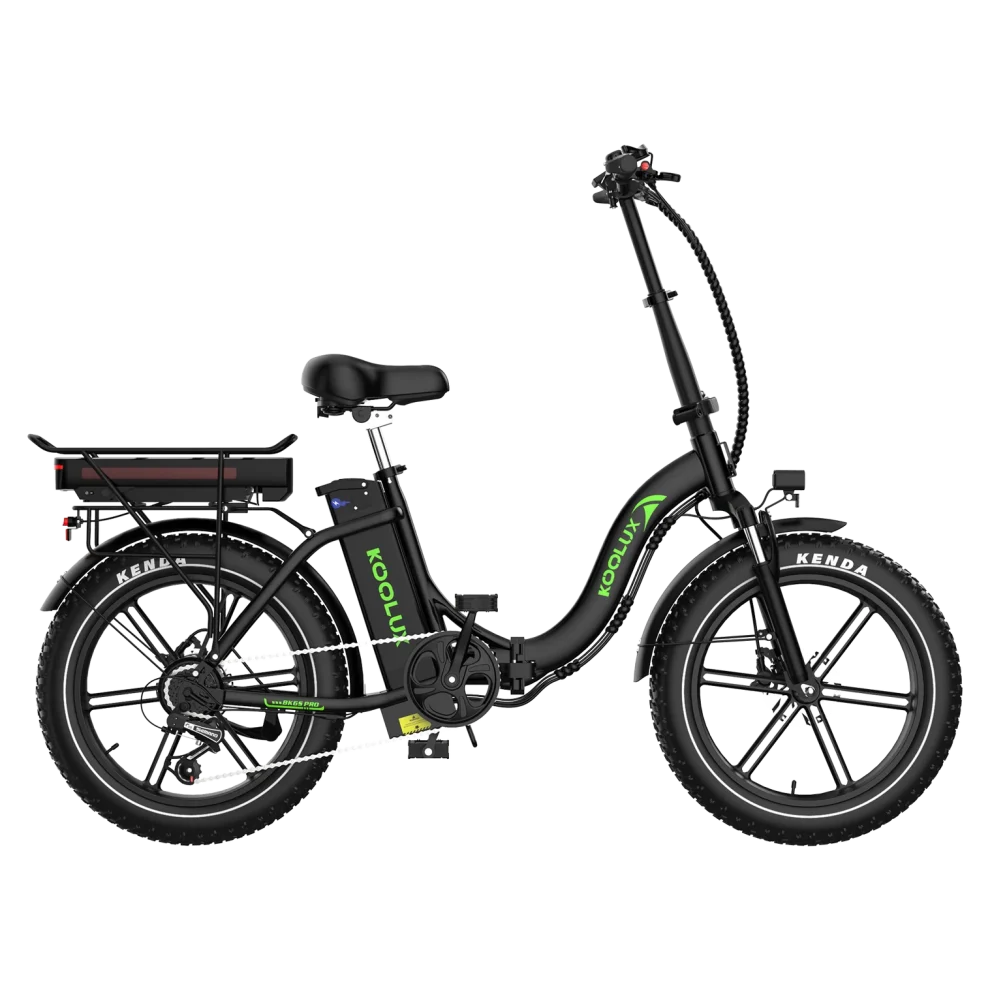
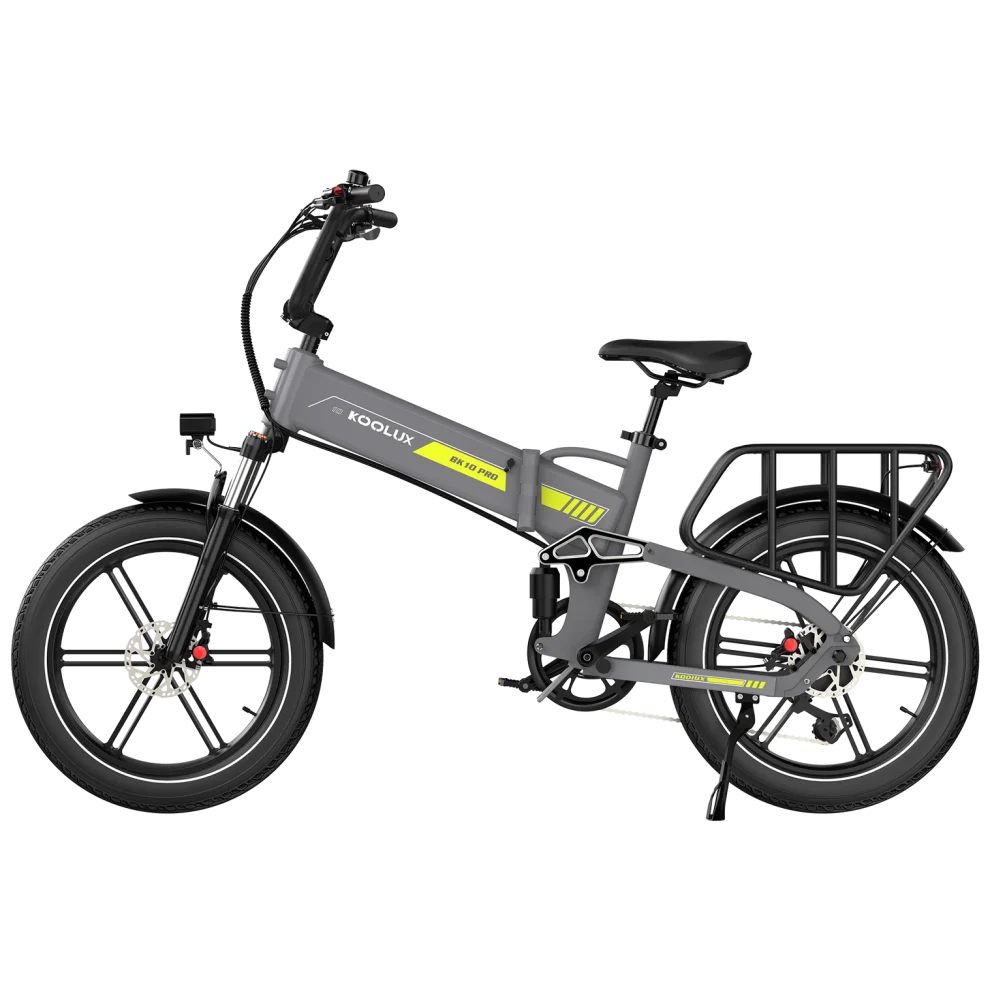
KOOLUX BK10 PRO Folding All-Terrain Electric Bike
The KOOLUX BK10 PRO stands out for its 48V 15Ah battery built with 21700 lithium-ion cells, known for improved energy efficiency and durability. With a claimed range of up to 70–90 miles, real winter performance typically falls between 55–70 miles, making it suitable for medium to long-distance commuting.
Its motor system supports steady climbing up to 25°, while the 20-inch tyres and dual disc brakes provide stability on wet urban roads. The foldable design makes it practical for commuters who combine cycling with public transport. While the IP54 waterproof rating offers basic weather protection, its balanced battery performance and manageable charging time of 5–6 hours make it a dependable option for winter-ready daily travel.
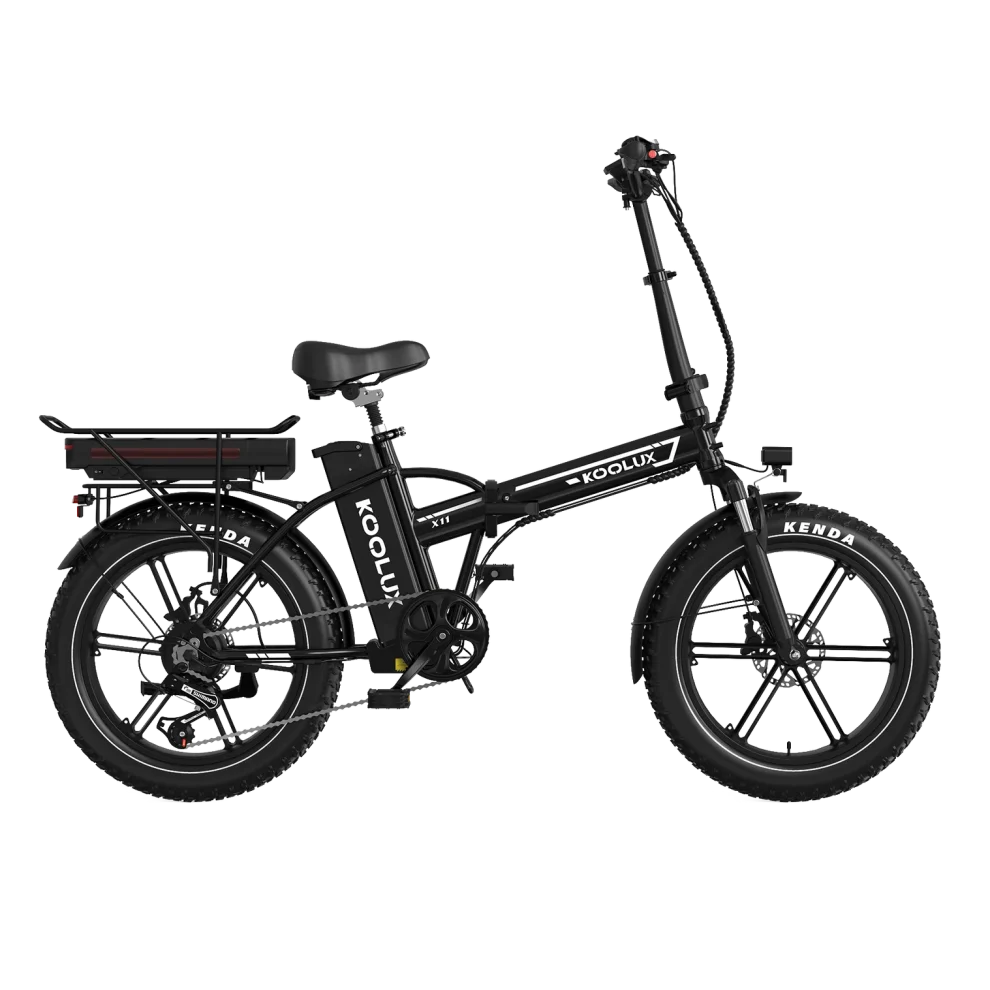
KOOLUX X11 500W Folding E-Bike
The KOOLUX X11 500W is a more efficiency-focused long-range electric bike, ideal for commuters who prioritise battery optimisation over high motor output. Featuring a dual battery configuration (48V 13Ah + 10.4Ah), it offers a claimed range of up to 75–90 miles, with realistic winter mileage around 55–70 miles.
Its 500W motor delivers controlled power that supports moderate hill climbing while conserving battery life, which can be advantageous during colder months when lithium-ion efficiency naturally declines. The folding frame and 20-inch tyres enhance manoeuvrability in city environments. For riders covering steady daily routes without demanding terrain, this model offers a practical and cost-effective winter commuting solution.
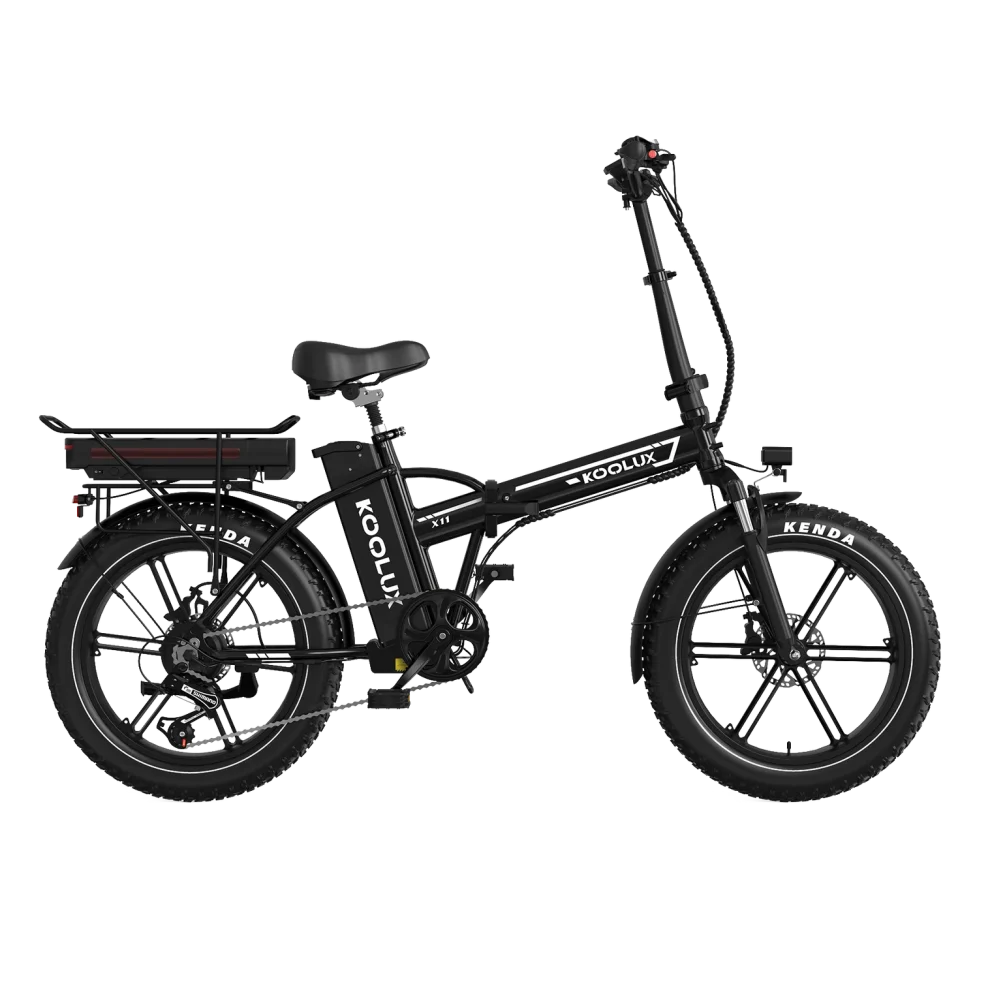
KOOLUX X11 750W High-End Folding E-Bike
For riders who need both range and stronger acceleration, the KOOLUX X11 750W High-End version provides added motor power while maintaining similar battery capacity to the 500W variant. With its 48V dual battery system, it can achieve up to 80–100 miles in ideal conditions and approximately 60–75 miles during winter use.
The 750W motor offers improved torque and climbing capability, making it suitable for longer commutes or routes with elevation changes. Front and rear disc brakes, combined with stable tyre sizing, support safer riding on wet roads. While higher power output can increase energy consumption at maximum assist, it remains a solid choice for riders who require stronger performance without sacrificing long-range capability.
Best Long-Range eBike for Commuting in Manchester
Commuting in Manchester requires an electric bike built for frequent rain, colder temperatures, and stop-start urban traffic. With regular wet conditions throughout the year, riders benefit from a long-range eBike that offers strong waterproof protection (IP-rated components), reliable disc brakes, and stable tyre grip for slippery roads.
Daily commuting distances in Greater Manchester typically range between 10 and 40 miles. In winter, battery efficiency naturally declines, so choosing a high-capacity lithium-ion battery — ideally 750Wh or higher — ensures dependable real-world range. An efficient motor system with smooth torque delivery also helps maintain performance without excessive battery drain during traffic-heavy routes.
Road conditions vary across the city, from smooth cycle lanes to uneven streets, making durability and ride stability essential. Folding electric bikes are particularly practical for urban storage, whether at home, in office spaces, or when combining cycling with public transport.
For Manchester commuters, the best long-range electric bike balances battery capacity, weather resistance, efficient motor performance, and everyday practicality — delivering consistent mileage and reliability throughout winter 2026.
Are Long-Range Electric Bikes Worth It in 2026?
For commuters covering longer daily distances, a long-range electric bike in 2026 offers clear financial and practical advantages. With rising petrol prices and increasing urban congestion across the UK, many riders are turning to high-capacity eBikes as a cost-effective alternative to car travel.
Cost vs Petrol Savings
The running cost of an electric bike is significantly lower than a petrol vehicle. Charging a 750Wh or 1000Wh lithium-ion battery costs only a small amount per cycle, while maintenance remains minimal compared to fuel-powered transport. Over time, savings on fuel, parking, and servicing can make a long-range eBike a financially smart investment for daily commuting.
Environmental Impact
Electric bikes produce zero tailpipe emissions and consume far less energy than cars. For city riders — particularly in areas like Manchester — switching to an eBike helps reduce traffic pollution and supports more sustainable urban mobility. Improved battery efficiency and smarter motor systems in 2026 models further enhance energy optimisation.
UK Government Incentives
In the UK, schemes such as Cycle to Work continue to make electric bikes more affordable through tax-efficient salary sacrifice programmes. While regional incentives vary, these initiatives can reduce the upfront cost of purchasing a long-range electric bike.
FAQs
How much range do you lose in winter?
Cold temperatures can reduce electric bike range by approximately 10–30%, depending on battery capacity, terrain, and riding style. Higher-capacity batteries help offset this seasonal reduction.
What is the longest range electric bike in 2026?
In 2026, some high-capacity models with 1000Wh or dual-battery systems can achieve up to 100 miles or more under ideal conditions. Real-world winter range will typically be lower.
Can you charge an eBike battery in a cold garage?
It is best to charge lithium-ion batteries at room temperature. Charging in extremely cold environments can reduce efficiency and may affect long-term battery health.
Are fat tyre eBikes better in winter?
Fat tyre electric bikes provide improved grip and stability on wet or uneven surfaces. However, they may slightly increase rolling resistance, which can affect overall range.
Conclusion
Choosing the best long-range electric bike for Winter 2026 comes down to one key factor: reliable real-world performance. While advertised mileage figures are important, winter efficiency, battery capacity, motor optimisation, and overall durability matter far more for daily commuting in the UK.
Modern long-range eBikes equipped with 750Wh to 1000Wh lithium-ion batteries, efficient motor systems, and smart battery management now offer stronger cold-weather reliability than previous generations. For commuters in cities like Manchester where rain, wind resistance, and stop-start traffic are common selecting a winter-ready electric bike ensures consistent range, safer handling, and lower running costs compared to petrol transport.
From 20-mile daily commuters to 60-mile long-distance riders and delivery professionals, the right high-capacity electric bike can deliver both financial savings and long-term practicality. With improved battery lifespan, lower cost per mile, and reduced environmental impact, long-range electric bikes remain a smart and sustainable investment in 2026.
By focusing on realistic winter range, efficient power delivery, and weather-resistant build quality, riders can confidently choose an electric bike that performs dependably throughout the colder months and beyond.